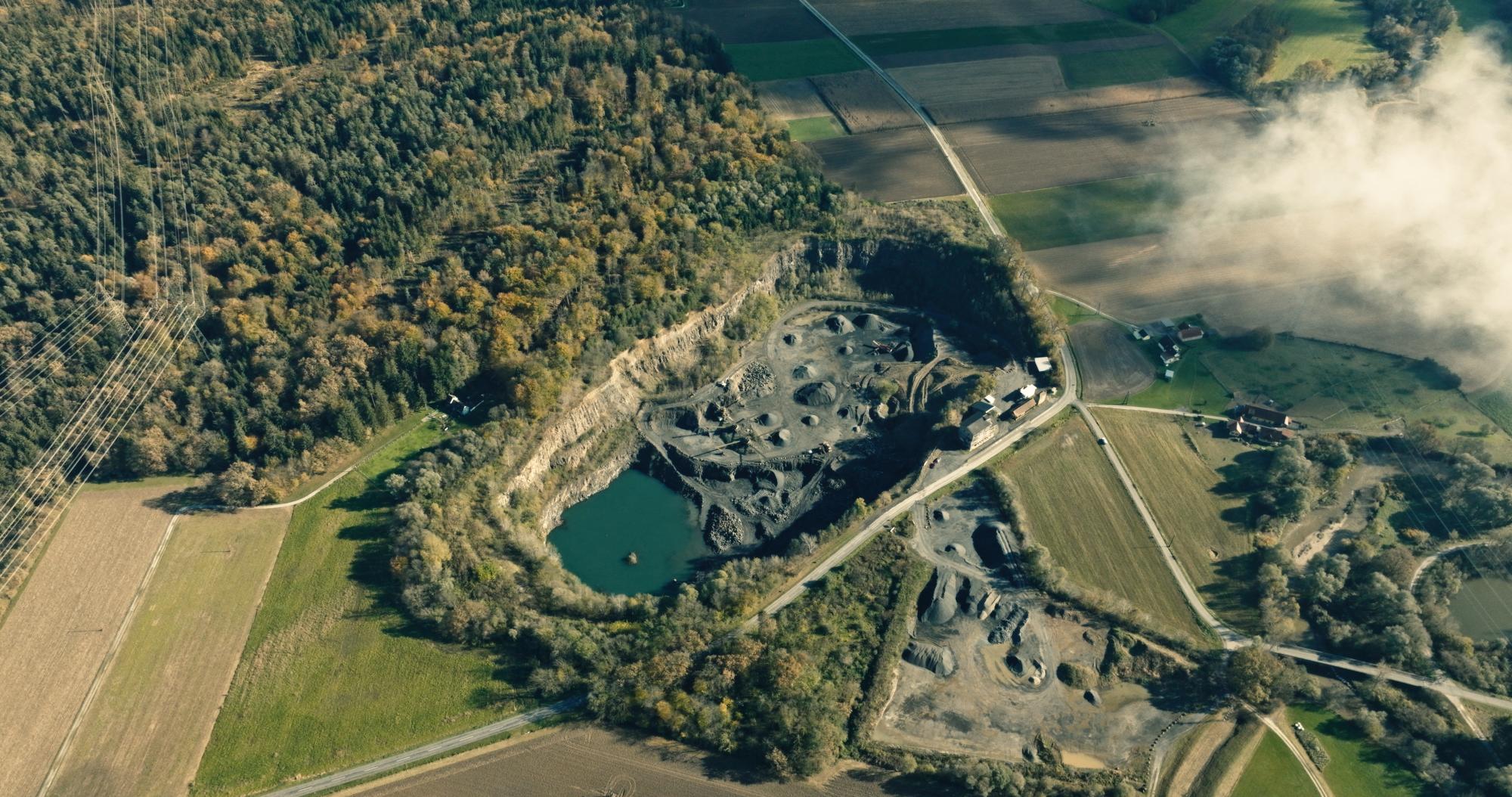
On cold winter mornings in Graz, the air often sits heavy in the basin surrounding the city. For the 340 000 people who live there, heating is a necessity. But it is also one of the city’s biggest climate problems.
Around half of the city’s district heating still comes from fossil fuels, and another 100 000 new homes are expected to connect to the network by 2030. District heating is one of the city’s most powerful tools to cut emissions, improve air quality and meet its 2030 climate targets.
From solar storage to clean heat
Sonnenspeicher Süd, one of the world’s largest solar heat storage project, is part of the solution.
Built in a former basalt quarry, this innovative plant stores the thermal energy produced by a 28-hectare solar collector field in 1.5 million cubic metres of water. Combined with large-scale heat pumps and an integrated photovoltaic system, it can supply more than 215 gigawatt hours of renewable heat each year. An integrated lid minimises heat loss from the reservoir, and AI-driven control systems optimise loading and unloading cycles.
The company behind the project, Wärmespeicher Weitendorf GmbH, proved years ago that the idea was technically feasible. Now, it is being brought to life.

How EIB Advisory helped
ELENA under EIB Advisory gave us the resources and confidence to move from concept to reality. Without this support, we would have lost years, and the climate does not have that time.”

Heimo Ecker-Eckhofen
CEO of Wärmespeicher Weitendorf GmbH
EIB Advisory experts, under the InvestEU ELENA facility, are helping Wärmespeicher Weitendorf carry out the technical design, environmental assessments, legal and business planning and procurement preparation - in parallel, rather than sequentially.
“ELENA under EIB Advisory gave us the resources and confidence to move from concept to reality,” says Heimo Ecker-Eckhofen, the company's chief executive. “Without this support, we would have lost years, and the climate does not have that time.”
Once fully operational, Sonnenspeicher Süd will help Graz save around 100 000 tonnes of carbon dioxide emissions each year, roughly equivalent to taking 60 000 cars off the road.
“Decarbonising district heating is one of the toughest challenges for European cities,” says Daniela Bachner, an EIB Advisory expert who worked on the project. “By supporting Graz with technical expertise and business planning assistance, we are helping create a blueprint for others to follow.”